 I have always felt that Dorchester Abbey can offer everyone, from the young student to our more mature visitors, a fabulously unique educational experience. This has been brought home to me this week more than ever as the Abbey hosts NAPE’s annual Festival of Voices. This event brings primary schools from all over Oxfordshire together to sing in unison within the beautiful Abbey setting, conducted by Kevin Stannard and Peter Hunt. It was enjoyed by an enthusiastic audience of parents and siblings and some dignitaries, including the Mayor of Wallingford and his wife.
As I sat listening to the Tuesday night performance it struck me how it recalled the earlier medieval traditions of the Abbey when the monks would have sang in plainchant in the choir, the area where the 300 children were staged en masse, their high voices resonating in the vast Abbey space. The varied musical programme offered a range of songs from around the world, such as the traditional Congolese ‘Banaha’, the swirling melody of the Ghanaian ‘Senwa Dedende’ or the Jamaican 'By the Rivers of Babylon' where we were all encouraged to join in, to more popular tunes such as Abba’s ‘Money, Money, Money’ and Elvis’s ‘Jailhouse Rock'.

The children clearly enjoyed themselves with plenty of smiles and jiggling gestures when required! The final song of ‘World in Union’ evoked a sense of social harmony and accord world leaders can only aspire towards. As a collection was taken for ‘Save the Children’ the children provided an encore reprise of a few of the melodies, to the great enjoyment of the audience. Their performance highlights how much so many owe to so few, as these massed children and parents do to the teachers, conductors, musicians and all who assist with the staging of this tremendous week long event.
As this event demonstrates every school visit to Dorchester Abbey is unique, just as every individual child is unique. In the week prior to this one I hosted an educational visit to the Abbey for over 60 children. Because each school is as unique as each child I aim to create an equally unique visit. Thus I enjoy being able to meet with schools before their visits to the Abbey, thereby discussing particular syllabus requirements, individual ideas and to explore aspects of mutual interest for their students.
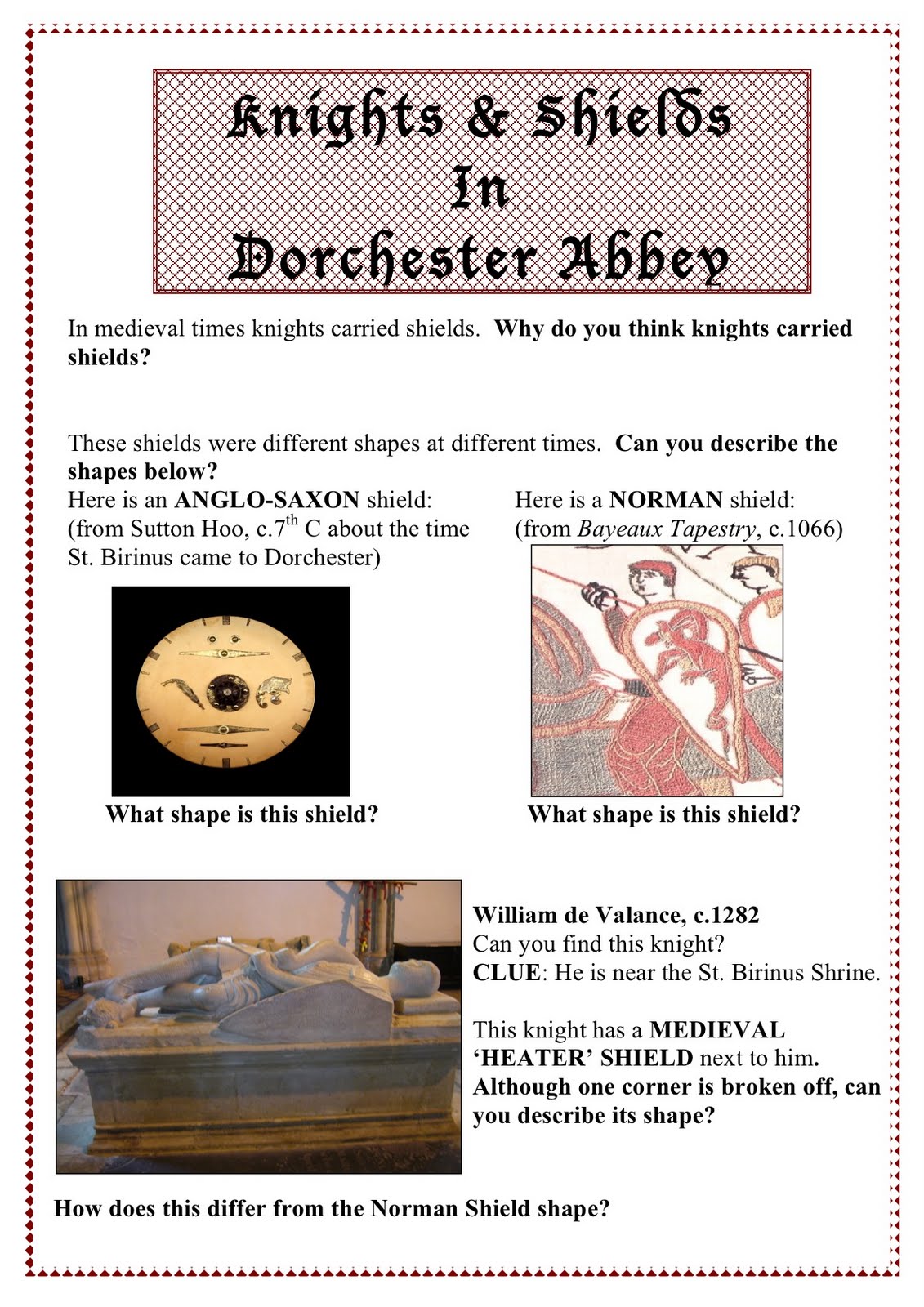
Although the school had enjoyed previously visits to the Abbey they were excited by the opportunity of exploring new educational trails and innovative activities, resulting in a programme that included a religious and cultural ‘scavenger hunt’, an investigation of our knights and the heraldic window enabling them to design their own coats of arms, as well as the perennially popular activities of sketching and brass rubbing. They also enjoyed combining these activities with their own personal written responses to the Abbey which culminated at the end of the day in a selection of the best ones being read out by the students from our Victorian pulpit. The variety of responses ranged from personal prayers to astute descriptions of the space, but each pupil read their contribution out with the lilt of excitement in their voices and an extreme sense of achievement.

In addition to these events I have also been going out to meet teachers and introduce them to what the Abbey and Dorchester has to offer them and their classes through INSET presentations. The current educational watchword is ‘cross-curricular’, which is something Dorchester excels at! As well as the obvious RE (Religious Education) links, we have history, geography, art and architectural heritage, and music in spades! Not to mention the many other links we could make. The wealth of history not only the Abbey, but Dorchester and its geographical surroundings, has to offer is certainly unique. I explain how Dorchester declares the significance of its past geographically to the children from afar before they even arrive, as they see the two domineering mounds of Wittenham Clumps and then the Abbey tower becomes just visible through the trees as they approach the village.
 I have demonstrated our newly arrived Museum Loans Boxes, which contain original artefacts and replica items from the Anglo-Saxon and Roman periods, complete with lesson materials and supporting books, all of which are free for schools to borrow. This initiative has already proved to be very successful for the schools who have borrowed them so far. We are also going to stage a Key Stage 2 ‘Pilgrimage and Worship’ study day for schools in June 2011, which is currently in the initial planning stage and which we might develop further Loans Boxes.
 July sees the return of our Musuem-Abbey-Archaeological site visits, where schoolchildren have the opportunity to see archaeology in action and try their hand at some dig-related activities. Just the type of method that brings history to life for students and teachers alike! (Go to http://discoveringdorchester.blogspot.com/ for further information on the Dorchester Dig!)
Here ends another educationally unique month, I look forward to many more!!
(Blogged by the Abbey's Education Officer)


